
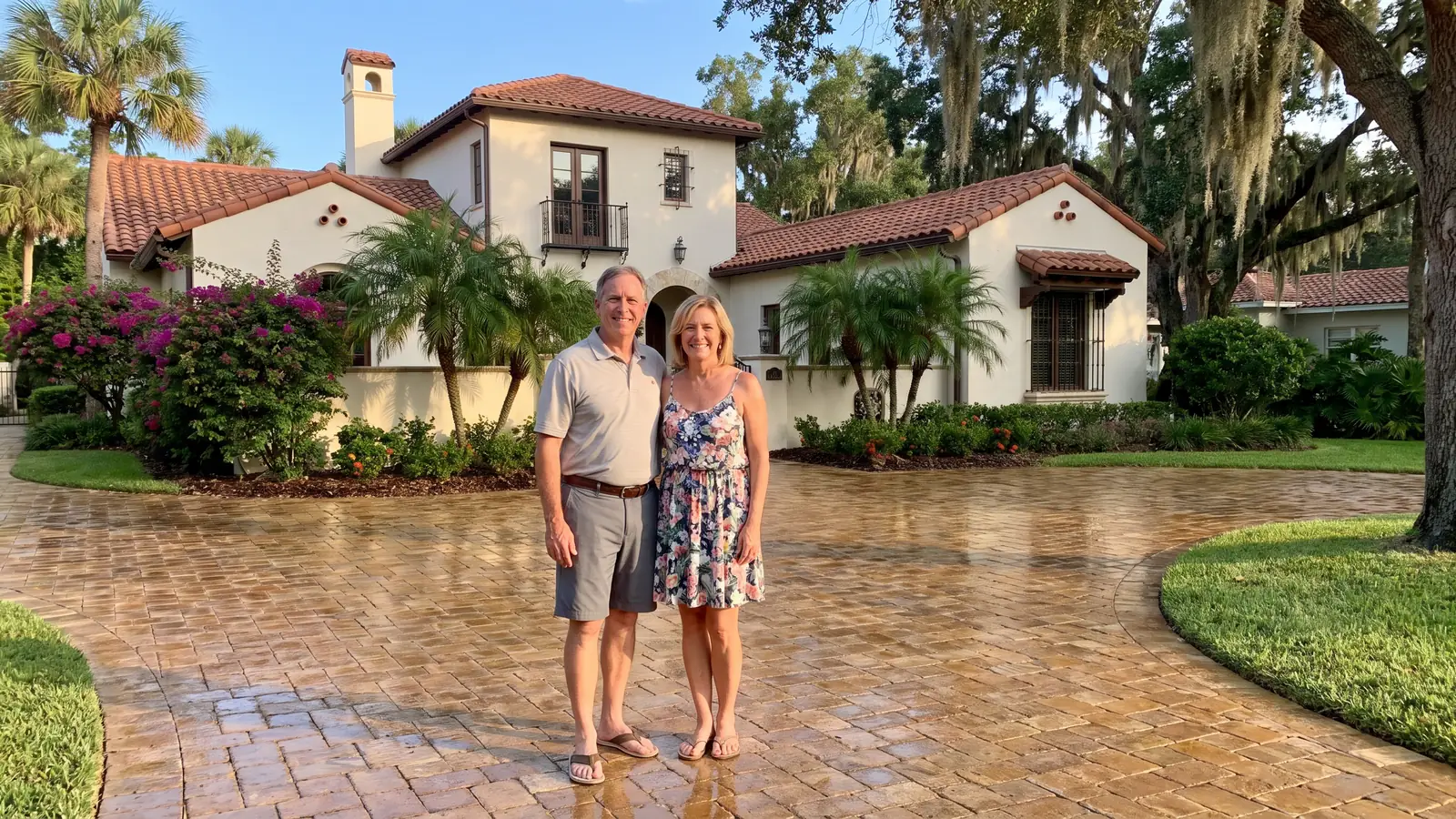
Fuller color, full joints and easier upkeep
Paver Sealing in St. Augustine, FL
Call (904) 664-5908 for a free paver sealing estimate anywhere in St Augustine.
- Brings out deeper paver color
- Fresh joint sand helps lock pavers in place
- Gives weeds less room to grow
- Makes the surface easier to keep clean
- Free estimate, no obligation
Request a Free Estimate
Free, no obligation.
How fast can I get paver sealing in St. Augustine?
Pavers anywhere in St. Augustine, FL can be sealed by a local contractor, and a reply comes within 1 business day, usually much sooner. The estimate is free, with no obligation. To get started, call (904) 664-5908.
Sealing deepens paver color, keeps joint sand from washing away and cuts down on scrubbing later. Picture the front walk with its color restored, its joints full and no green creeping in from the shady side. A driveway takes tires and oil drips, while a pool deck takes water and bare feet, so say how each area gets used when you ask for a free estimate.
Paver Sealing St Augustine FL Is Proud to Serve Northeast Florida
What is included in a paver sealing job?
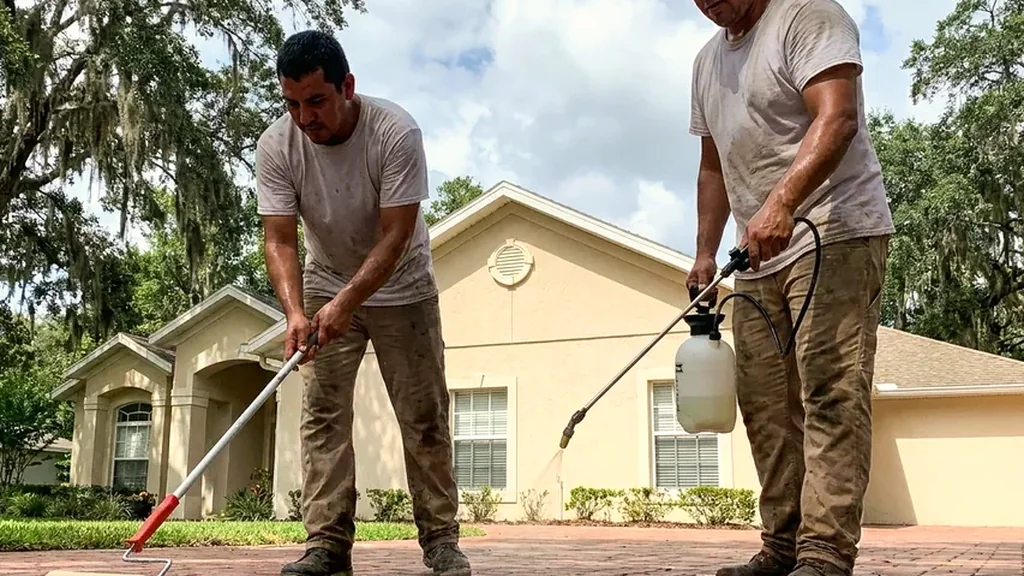
A sealing job includes a look at the surface, a wash, new joint sand and a coat of sealer, in that order. The wash comes first because sealer holds on to whatever is under it. To walk through the steps for your own pavers, call (904) 664-5908.
Walk-through
The contractor checks for dips, peeling old sealer and stains, and watches where water runs off.
Wash
Algae, dirt and residue come off first, since a coat over them traps them there.
Joint sand
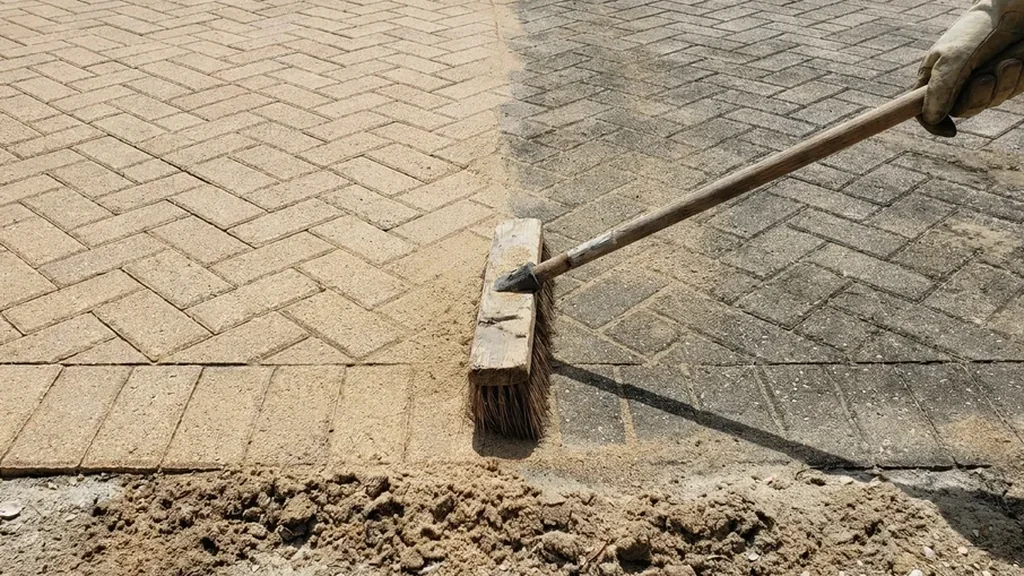
New sand goes into every joint so the pavers stay locked in place and weeds find little room.
Sealer
Unilock, a paver maker, describes a low-pressure sprayer or a roller, then back-rolling to even out marks.
When do pavers need sealing?
Pavers need sealing when the color has faded, the joints have lost sand or water soaks in instead of beading on an older coat. A St. Augustine paver company ties three problems to this region: sun that fades color, storms and sprinklers that carry sand away, and damp shade where algae grows. Empty joints let pavers shift, and that repair costs more than a new coat. To have yours looked at, call (904) 664-5908.
Which type of paver sealer should I ask about?
No single type suits every home, so ask which product the contractor plans to use and why. Unilock, a paver maker, describes water-based sealers as the more environmentally friendly choice that soaks deep into porous concrete, and says solvent-based sealers may be used where they fit. To talk through your surface, call (904) 664-5908.
The product matters most when something is already on the pavers. Unilock warns that a whitish film can come from trapped moisture, too much sealer or a new coat over an incompatible old one. Tell the contractor if the pavers were sealed before, and when you ask for a free estimate, mention the finish you want.
Should I choose a wet look or a natural finish?
A wet look finish deepens and darkens the color, and a natural finish stays close to the way the pavers looked new. If your street has a homeowner association, check its rules before you pick a glossy look. Ask to see both finishes on a sample when you ask for a free estimate.
How often should pavers be sealed in St. Augustine?
Plan on a new coat every two to three years in Northeast Florida. Safe Touch calls that typical and says full sun, pool chlorine and summer storms that wash out joints pull it closer to two. Unilock gives three to five years, depending on wear, exposure and the product. If water soaks in instead of beading, the coat may be worn, so to have yours checked, call (904) 664-5908.
Does a second coat of sealer protect pavers better?
Not by itself. Unilock links a whitish film to too much sealer or a second coat put on before the first has set, and it says to back-roll to even out marks. A thin, even coat on a dry surface beats a heavy one. Ask how many coats the price includes before you ask for a free estimate.
When is the right time to seal pavers?
The right time is a dry stretch, after the pavers have had time to dry out fully. Unilock advises letting the area dry longer than you think it needs, and it warns that rain during the cure can reduce how well the sealer works. Winter is the driest season in St. Augustine, according to Wikipedia, so ask when the contractor has open dry days. To pick a date, call (904) 664-5908.
New pavers need more patience. Unilock says to wait two to three months, and up to a year, so efflorescence can fade, because pavers must be clear of it before sealer goes on. Sprinklers matter too: St. Johns County Utility customers follow a Reclaimed Water Conservation Schedule set by subdivision and address, so ask the contractor to work around yours. To share your install date, ask for a free estimate.
Will sealing fix sunken pavers?
No, sealing will not fix pavers that sag or sit loose. A St. Augustine paver company says sealing protects pavers in good shape, and pavers that dip, lift or wobble need an installer to reset them before any coat goes on. Ask whether the quote covers leveling, and point out soft spots when you ask for a free estimate.
Which paver surfaces can be sealed?
Any paved area at a home can be sealed, from the driveway to the pool deck. Each one wears differently, so the plan should match how it is used. To start with yours, ask for a free estimate.
Driveways
A driveway carries tires, oil drips and the longest hours of sun on the property. Sealing here keeps the color even and the joints full, so pavers stay locked in place under a car.
Pool decks and lanais
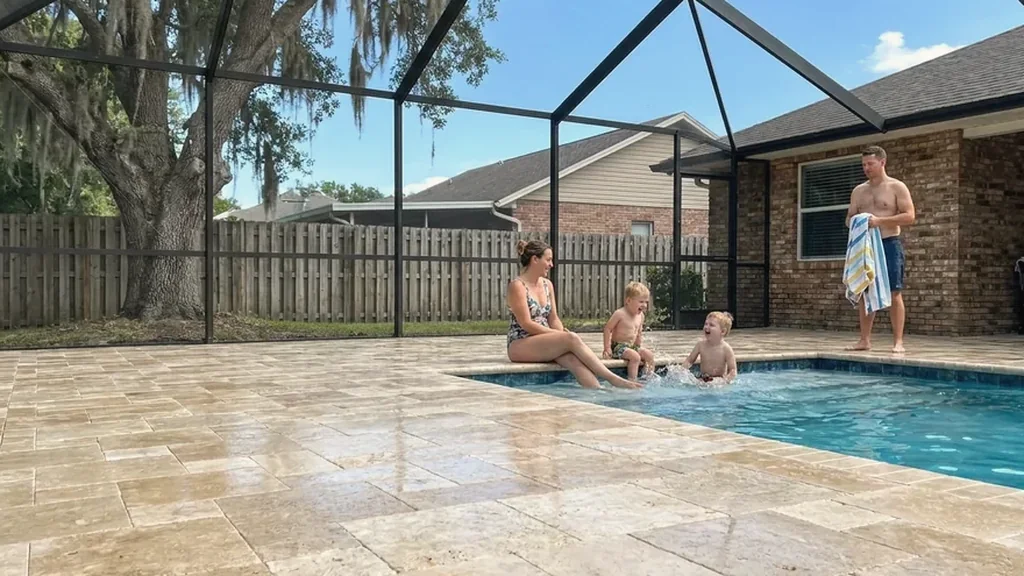
Pool decks stay wet, and splashing and bare feet wear them in their own way. Sealing around a pool should leave a surface that drains well and does not turn slick.
Patios
Patios sit in shade more often than not, so algae starts early and hangs on. Sealing on a patio goes after the green areas first and slows their return.
Walkways and entries
Walkways are narrow and run beside planting beds, so they pick up soil and irrigation stains. Sealing at the front entry makes the first step a visitor takes look cared for.
What paver problems are common in St. Augustine?
Five problems come up often in St. Augustine: fading, green growth, lost joint sand, coastal salt and sand, and sprinkler marks with tired old sealer. To find which of these apply to your pavers, call (904) 664-5908.
1. Color fading in full sun
Summer highs in St. Augustine sit in the lower 90s, according to Wikipedia, and a driveway with no shade takes that all day. A new coat brings the depth back and slows the next round of fading.
2. Green growth in damp shade
A St. Augustine paver company says shade and humidity grow algae and mildew on anything that stays damp, often side yards and north-facing patios. Left alone, the green turns slick.
3. Joint sand lost to storms
With measurable rain on about 118 days a year, sand slips out of the joints. Once it goes, pavers can shift and weeds move in, so fresh sand goes in before any sealer.
4. Salt and sand from the coast
Nicolock, a paver maker, says salt travels through the air as tiny particles and can crystallize as moisture dries. It advises occasional rinsing to remove salt residue and sand, more often closer to the shoreline.
5. Sprinkler marks and old sealer
Irrigation that hits one edge every day leaves stains, and a tired coat that has turned cloudy or peeled must be dealt with first. Ask the contractor what is on your pavers now.
What does paver sealing cost in St. Augustine?
Paver sealing in St. Augustine commonly runs $1.75 to $3.25 per square foot to clean, sand and seal, the range Safe Touch publishes for Northeast Florida. Price follows square footage first, then condition. Stained pavers, sunken sections and a failed old coat take more labor, and Safe Touch says stripping and resealing sits higher. To swap that range for a number on your home, ask for a free estimate.
Not ready to seal yet? Read about paver cleaning and joint sand, or see the areas served around paver sealing in St. Augustine.
| Paved area | Typical example | Clean, sand and seal |
|---|---|---|
| 300 sq ft | Small patio or walkway | $525 to $975 |
| 600 sq ft | Two car driveway | $1,050 to $1,950 |
| 1,000 sq ft | Large driveway or pool deck | $1,750 to $3,250 |
| 1,500 sq ft | Driveway plus pool deck | $2,625 to $4,875 |
Math based on the $1.75 to $3.25 per square foot that Northeast Florida paver companies published as of November 2026. Your contractor sets the actual price after seeing the surface. Repairs, leveling and stripping failed sealer are usually extra.
Why use a local contractor for paver sealing?
A local contractor already works under the same heat, rain and shade your pavers face. Get the price in writing, and read it as slowly as you like. To get started, call (904) 664-5908.
Contractors from around here
A contractor who covers St. Augustine knows the humidity, the summer storms and the damp shade that turn pavers green. Your plan starts from those conditions.
A free look first
The estimate is free. If the number does not fit your budget, you say no and the matter ends there.
Prices you can check
Northeast Florida companies post what they charge per square foot, so any quote can be held up against a real range.
Time to decide
Ask for the price in writing and read it at your own pace. This short page on what to check before you hire helps.
How do I get a free paver sealing estimate?
Call or send the short form. Expect an answer within 1 business day, often well before then.
Free, no obligation
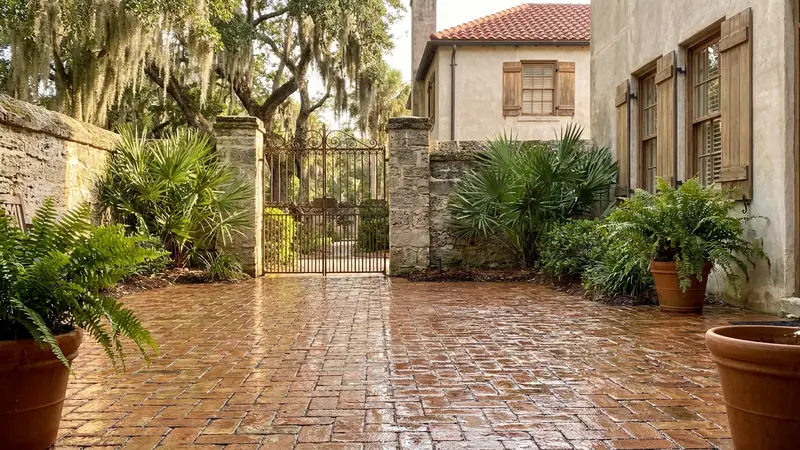
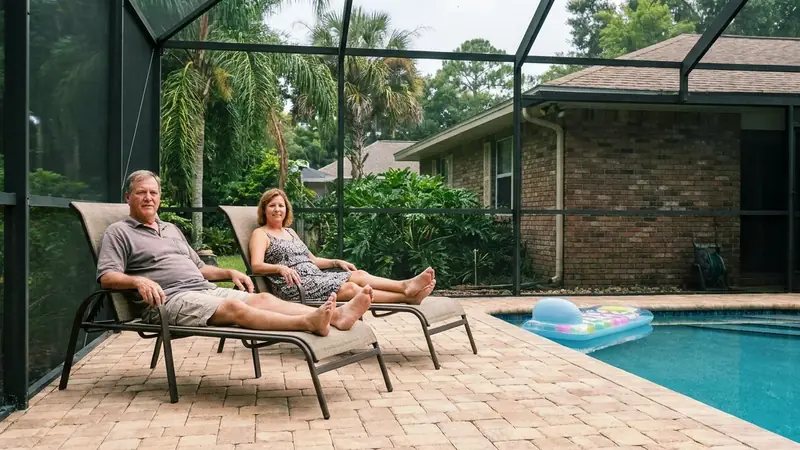
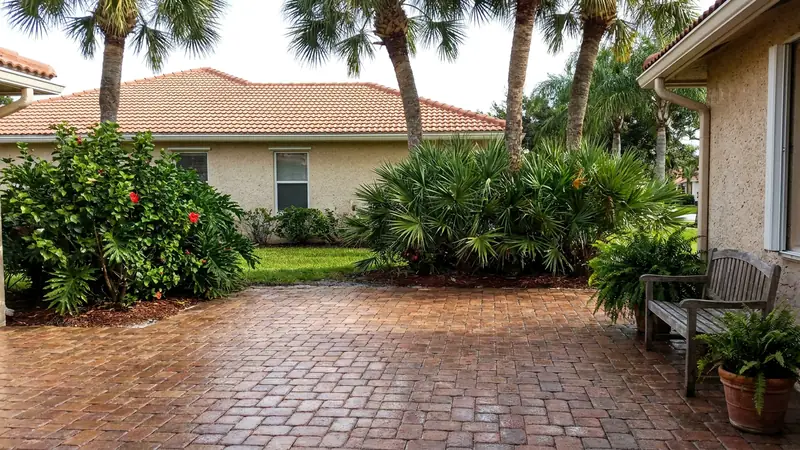
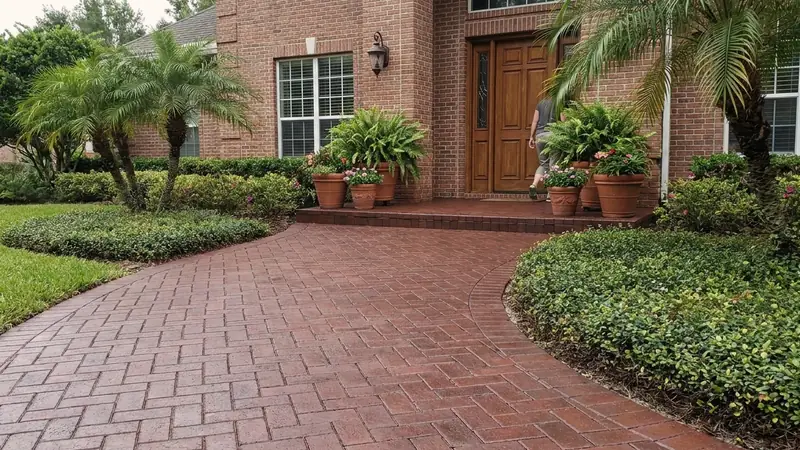
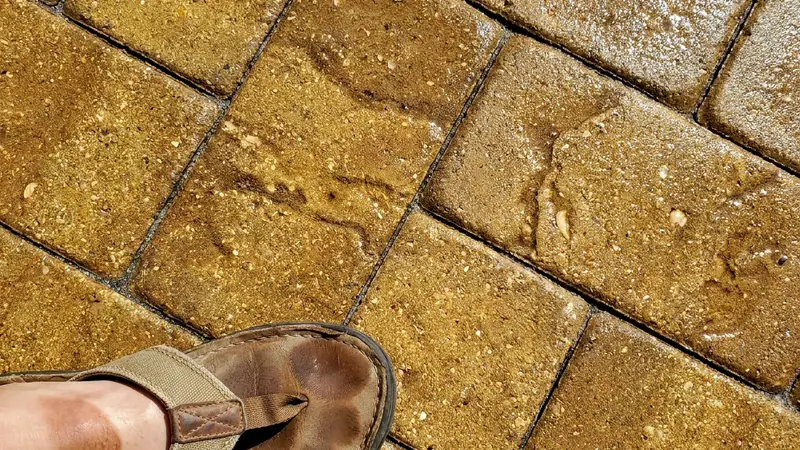
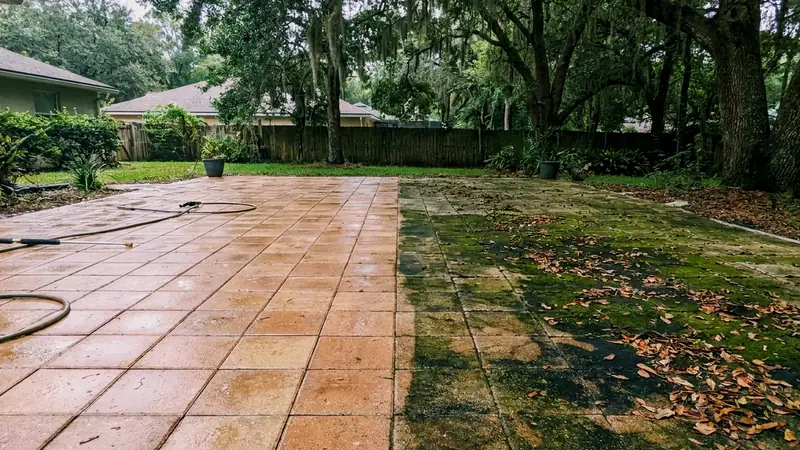
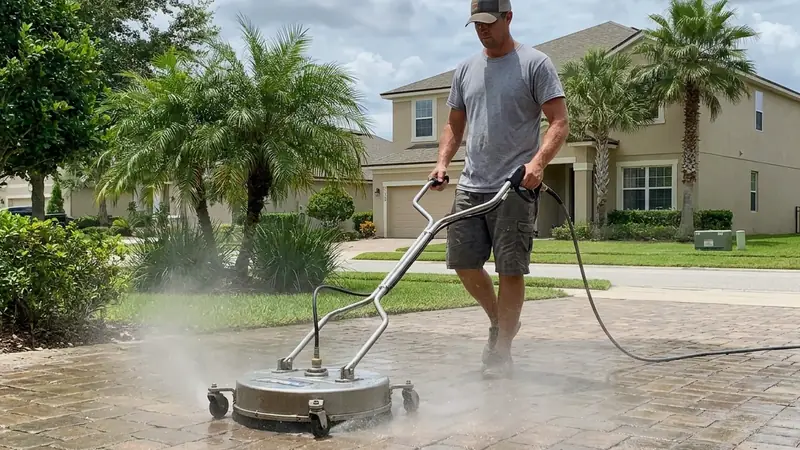
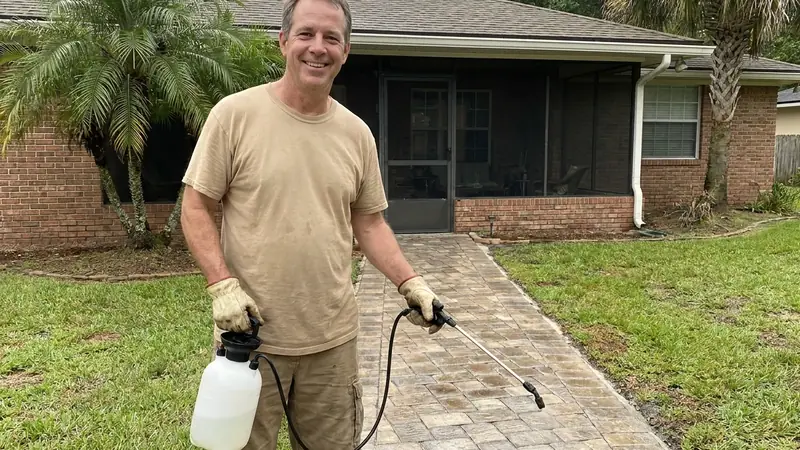
What does a freshly sealed paver surface look like in St. Augustine?
How does the paver sealing process work?
The paver sealing process runs in five steps, from the first walk-through to a last look together. To get on the schedule, call (904) 664-5908.
1. Look and measure
The contractor walks the pavers, measures the area for the quote and checks for dips, stains, old sealer and standing water.
2. Treat and wash
Algae and stains are treated, then rinsed off on a low setting. Unilock, a paver maker, warns that the wrong pressure can crack pavers or blow sand out of the joints.
3. Refill the joints
New sand is swept in after the surface dries and then packed down. The pavers lock together again, and weeds have less room.
4. Dry, then seal
Sealer goes onto a dry surface with a low-pressure sprayer or a roller, then gets back-rolled to even out marks. Sprinklers stay off while it cures.
5. Walk the job
You walk the finished area with the contractor and hear how long to stay off it. You also learn when to have the coat checked next.
Frequently Asked Questions
Is it good to seal pavers in Florida?
Yes, when pavers have faded, lost joint sand or turned green. Sealing brings back color, helps hold the sand in place and makes the surface easier to keep clean. The price of that is a fresh coat every few years, and it does not repair pavers that have sunk.
How long do paver sealers last?
In Northeast Florida plan on two to three years, which is what Safe Touch calls typical. Unilock, a paver maker, gives three to five years depending on wear, exposure and the product. Driveways and pool decks tend toward the short end.
How much is sealant for pavers?
The sealant is only part of the price, since the wash and the new sand come with it. Safe Touch lists $1.75 to $3.25 per square foot to clean, sand and seal in Northeast Florida. For a 600 square foot driveway the same rate works out to $1,050 to $1,950, and a failed old coat pushes it higher.
Is it better to spray or roll paver sealer?
Both work. Unilock, a paver maker, describes a low-pressure sprayer or a roller the sealer maker specifies, followed by back-rolling to even out marks. Ask the contractor which method they use and why.
Will an afternoon storm in St. Augustine ruin a fresh coat of sealer?
It can, which is why a contractor watches the forecast. Unilock warns that rain while a sealer cures can reduce how well it works, and St. Augustine gets measurable rain on about 118 days a year. Ask how the contractor handles a rained out day.
Can new sealer go over old sealer?
Sometimes. Unilock links a whitish film to a new coat over an incompatible old one or over a coat that has not set. A contractor should check what is on the pavers first, and Safe Touch says stripping a failed coat raises the price.
How long should I stay off pavers after sealing?
Light foot traffic is often fine the same day, according to Unilock, but a sealer takes longer to reach full strength. Ask the contractor how long to keep cars off, and keep sprinklers off for the same stretch.
Do pavers near the water in St. Augustine need extra care?
Salt matters near the coast. Nicolock, a paver maker, says salt travels through the air and crystallizes as moisture dries. It advises occasional rinsing, with the pace set by how close you are to the shoreline and how often storms hit, and a periodic check of the joint sand.
Can a pool deck in St. Augustine be sealed?
Yes. Ask which product the contractor recommends for a surface that stays wet and carries bare feet, and ask about a slip-resistant option. If the pool has a screen enclosure, ask how it will be protected during the wash.
Ready to protect your pavers?
Send the short form or call, and an answer comes within 1 business day, often well ahead of it.
Free, no obligation