
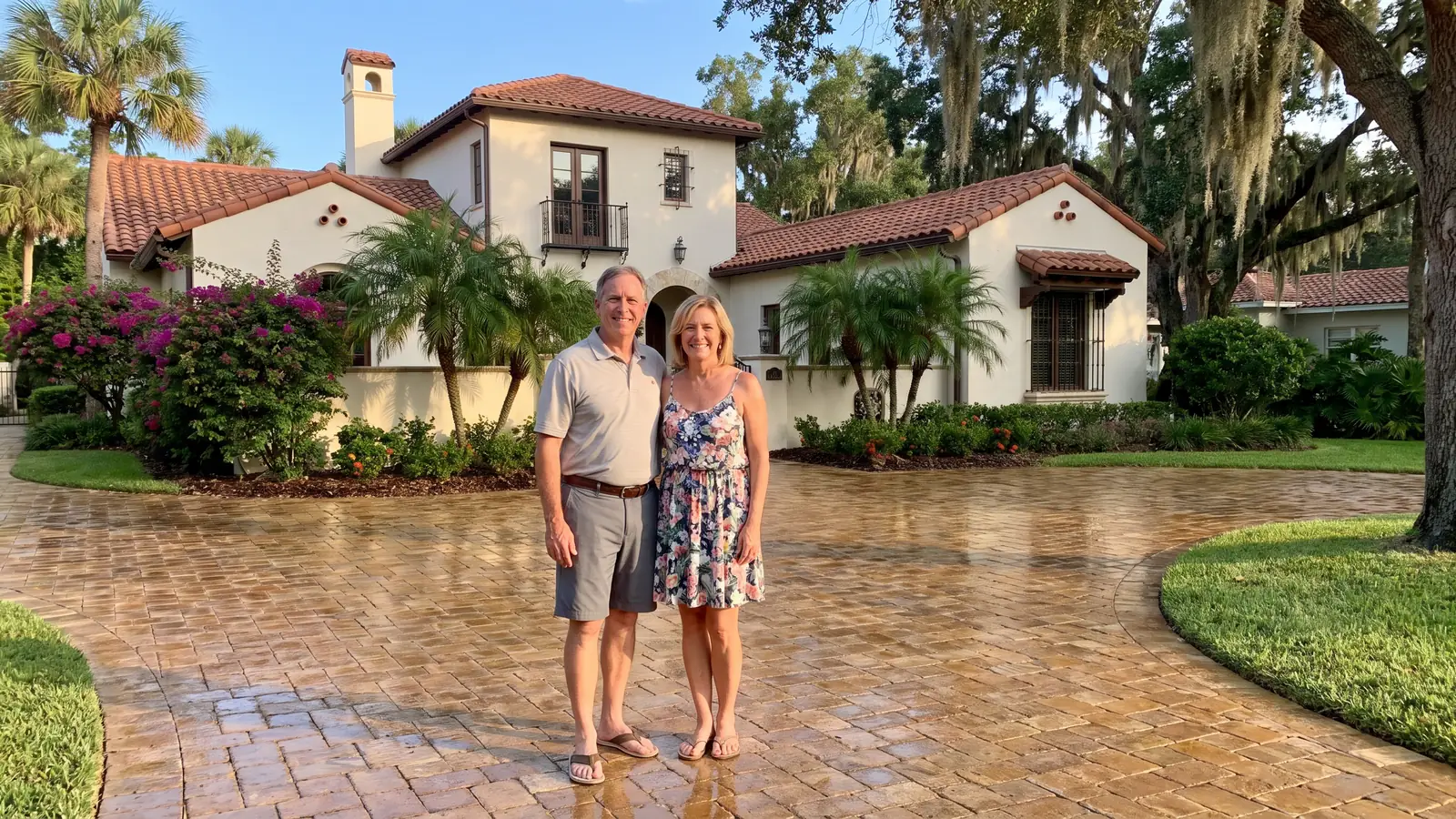
Paver sealing for Palm Valley homes
Paver Sealing in Palm Valley, FL
Canal Boulevard stayed under water for hours in October 2026, so Palm Valley sealing waits for dry pavers; call (904) 664-5908.
- Brings out deeper paver color
- Fresh joint sand helps lock pavers in place
- Gives weeds less room to grow
- Makes the surface easier to keep clean
- Free estimate, no obligation
Request a Free Estimate
Free, no obligation.
Fast, careful paver sealing in Palm Valley
Paver sealing is available across Palm Valley, from Palm Valley Landing and Plantation Oaks to Odom's Mill and Dolphin's Cove. A local contractor washes, re-sands and seals driveways, lanai floors and walkways, and the estimate is free. Ask at (904) 664-5908 and an answer follows within 1 business day, usually much sooner.
If your pavers wear a gray film and a green line along the edges, they are asking for attention. A wash, new sand in the joints and a fresh coat bring back an even color that looks cared for. To describe your pavers in your own words, you can ask for a free estimate.
Why hire a local paver sealing contractor in Palm Valley?
Palm Valley lies between the Intracoastal Waterway and A1A, and water drains slowly here after a hard rain, so drying time often decides the date. A local contractor plans around that, so ask for a free estimate.
Free look, no obligation
The contractor looks at your Palm Valley pavers and quotes a price at no charge. You decide what happens next.
A range to check against
Northeast Florida companies commonly publish $1.75 to $3.25 per square foot to clean, sand and seal. Use it to size up a Palm Valley bid.
A finish for pale pavers
Pale pavers show salt residue sooner, one paver maker says. Ask about matte versus wet look for your Palm Valley patio.
You set the date
You pick the day, and you can move it if rain moves in. A Palm Valley estimate has no obligation attached.
Get Your Free Estimate in Palm Valley
Tell us about your pavers in Palm Valley.
Free, no obligation
What paver problems show up most in Palm Valley?
Water that drains slowly after storms
In October 2026 Canal Boulevard in Palm Valley was underwater for much of one morning and into the afternoon, and standing water lingered in yards that evening. A neighbor said the drainage system could not empty because the Intracoastal was running high. A Southside paver page notes that the bedding sand under pavers can stay damp after rain. Sealer needs a dry surface, so a slow-draining lot means a patient schedule. Tell the contractor if a corner of your yard holds water, and that spot gets checked first.
Salt in the air on pale pavers
Palm Valley sits between the Intracoastal and A1A, and University of Florida says people within a couple of miles of salt water have likely seen salt spray damage on plants. A paver maker explains that airborne salt can crystallize on surfaces as moisture dries, and that pale pavers show splash marks and salt residue sooner. Routine rinsing helps with the buildup. Sealing slows how much grime and salt sink into the surface. A coat that has worn thin leaves the pavers open to both, so check yours before the next hot season.
White blooms and a chalky surface
Palm Valley's humid period lasts about six and a half months, from April 26 to November 11, according to Weather Spark as cited by Wikipedia. Moisture moving through cement pavers can leave efflorescence, a white deposit that often shows in the first or second season. A coat laid over that film locks it in. The contractor treats and washes it first, then seals once the surface is dry. That order matters most on a patio that has not been sealed in years.
Pool surrounds that never quite dry
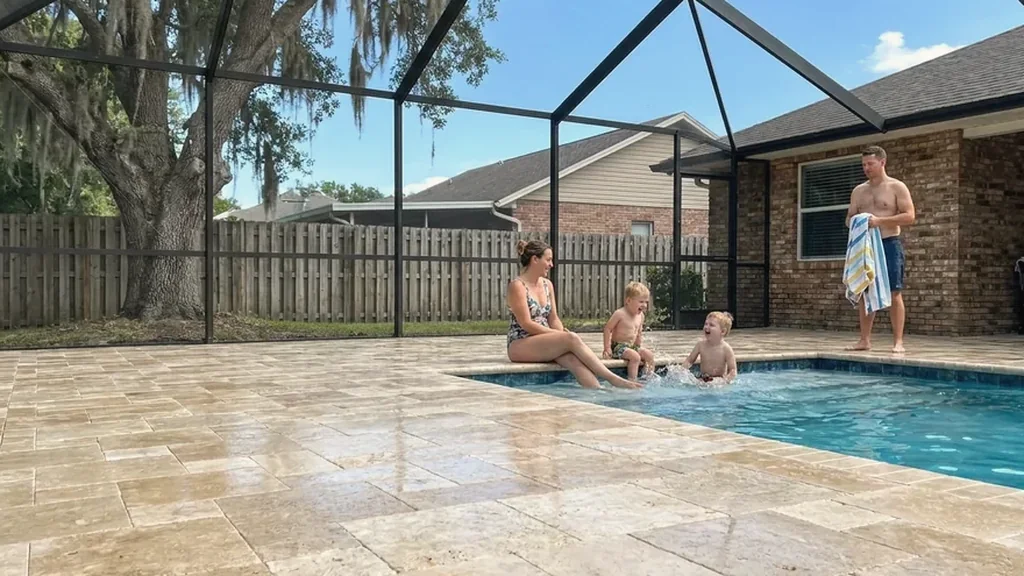
Shade, splash-out and constant moisture change how a pool surround is prepped and cured, so one St. Johns County paver company plans those areas separately. In Jacksonville, most pool decks get a penetrating sealer, because a film-forming one can trap moisture and turn slick, a cost guide explains. Ask the contractor which type is going on your deck, and what grip it gives when wet.
Rust lines and green film from yard water
Iron in irrigation water is a common cause of orange streaks, and most Florida well water carries plenty, University of Florida notes. Tree-shaded patios also need extra cleaning for algae, mildew and leaf stains, a Jacksonville guide says. Both marks should come off before sealing, since the coat would trap them. Tell the contractor where your sprinklers point and which side stays shady. Those two clues explain most of the stains on a Palm Valley walkway.
Do townhomes and single-family homes in Palm Valley need different sealing plans?
Yes, mostly because the person who approves the work differs. In the 2024 Census estimate, 5,981 of Palm Valley's 9,803 housing units are single-family detached houses, and 2,511 sit in buildings of 3 to 19 units. A house owner picks a finish alone, while a townhome owner may need a board's okay. Say which you have when you ask for a free estimate.
Named neighborhoods include Palm Valley Landing, Plantation Oaks, Seaside, Odom's Mill and Dolphin's Cove. Odom's Mill has more than 230 single-family homes of about 1,800 to 4,200 square feet and a community pool, so driveways and entries vary a lot in size. Homes listed or recently sold in Plantation Oaks were built from 1985 to 2006, and 14 of 15 report an HOA. If your street is in one of these, call (904) 664-5908 and name it.
Part of Sawgrass lies inside Palm Valley, and the Sawgrass PLAYERS Club has a master homeowners association board that sits above the smaller associations. Florida law lets an HOA review the appearance of changes as far as its declaration allows. A Southside paver page says a natural-look sealer may count as maintenance, while a high-gloss one is more likely to need approval. Read your rules, then ask for a free estimate.
What does paver sealing cost in Palm Valley?
A clean, sand and seal is commonly priced at $1.75 to $3.25 per square foot across Northeast Florida. Palm Valley driveways, lanais and pool decks are measured together, so a larger layout raises the total even at a steady rate. One Jacksonville guide says shaded patios and pool areas need extra cleaning for algae, mildew and leaf stains, which adds time. For your own number, ask for a free estimate.
Several details move a Palm Valley price, and none of them is a surprise if the contractor sees the lot first. A pool surround takes longer to prep and dry, one St. Johns County paver company says. Stripping a failed old coat costs more, and small jobs cost more per foot. Call (904) 664-5908 and describe your pavers, and the contractor can say which of these apply.
| Paved area | Typical example | Clean, sand and seal |
|---|---|---|
| 300 sq ft | Small patio or walkway | $525 to $975 |
| 600 sq ft | Two car driveway | $1,050 to $1,950 |
| 1,000 sq ft | Large driveway or pool deck | $1,750 to $3,250 |
| 1,500 sq ft | Driveway plus pool deck | $2,625 to $4,875 |
Math based on the $1.75 to $3.25 per square foot that Northeast Florida paver companies published as of November 2026. Your contractor sets the actual price after seeing the surface. Repairs, leveling and stripping failed sealer are usually extra.
How does a paver sealing job work in Palm Valley?
Look at drainage first
Before any water touches the pavers, the contractor looks at where rain collects on your Palm Valley lot. Low corners and edges beside a yard drain or canal get extra attention. Old sealer is identified too, since water-based sealer cannot go over solvent-based. A past coat that is peeling or patchy is a useful clue. If your lot has flooded before, say so now, because it changes how long the pavers need to dry. A note about which spots stay wet saves a return trip.
Wash off the film and the salt
The wash clears algae, mildew, rust and the dull film that humid air leaves behind. A paver maker says routine rinsing helps manage salt buildup in coastal regions. Pool-side pavers get careful rinsing so water stays out of the pool where possible. Deep oil or rust stains may lighten without fully leaving, and the contractor should tell you that up front. You should hear what the wash can and cannot do before any work starts, and what that means for the price.
Replace the joint sand
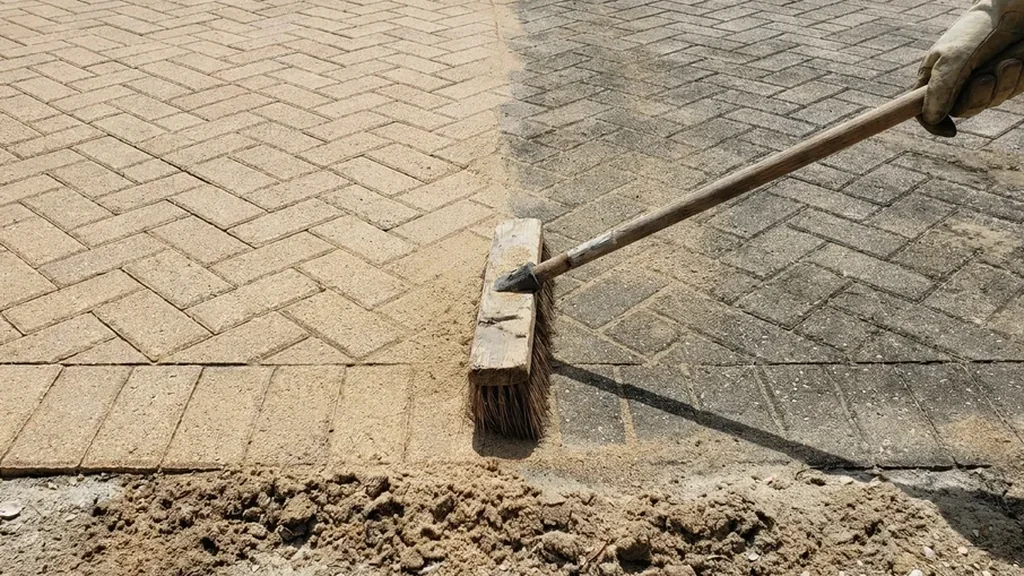
Joints lose their sand in the wash, so new sand is packed in before the coat. After a heavy rain, joints are the first place to empty, which lets soil in and weeds follow. The contractor packs the joints, then sweeps the surface clean. Full joints keep the pavers from shifting under a sealed surface. If a past storm washed sand away, expect this step to take longer than the wash, and ask the contractor to show you the joints before the coat goes on.
Give the pavers time to dry
This is the step that decides a Palm Valley date. Sealer cannot go on a wet surface, and the humid period here runs from late April to early November. Pavers by a pool screen or under shade dry last. A Jacksonville company traces most cloudy, white sealer to damp pavers or a coat laid on too thick, so waiting is worth it. A one-day wait costs far less than stripping a cloudy coat.
Seal and stay off
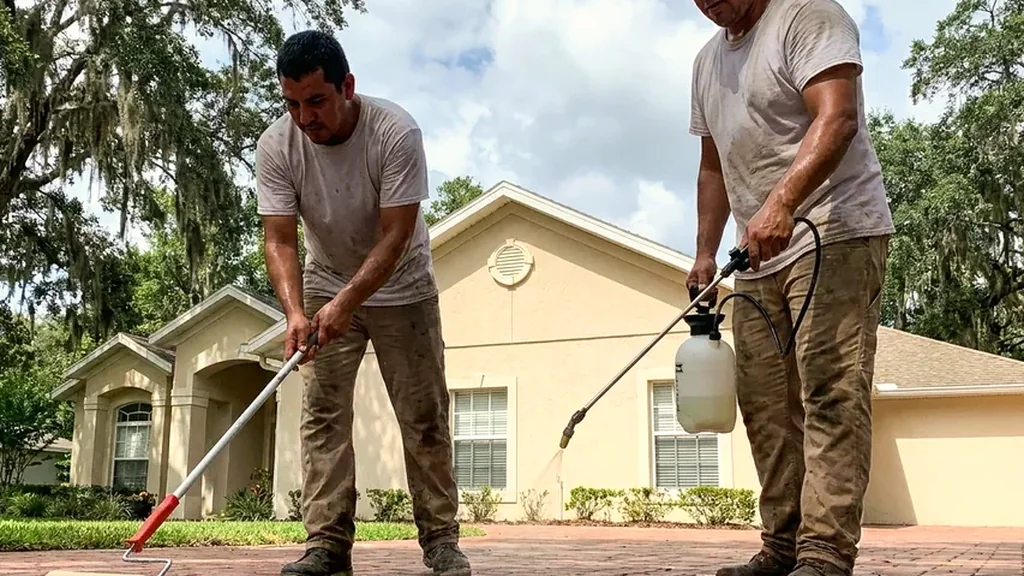
Finally the sealer is sprayed on in your chosen finish and back-rolled. Wet look deepens color, while matte holds up longer against scuffs. Two to five years is the span companies usually give before the next coat. A Jacksonville company says foot traffic is usually fine within a few hours and cars need about a day. Plan your parking before the visit, so the new coat is left alone overnight.
Complete paver services in Palm Valley
Think of a Palm Valley job as four parts in a fixed order: wash, new sand, drying time, coat. Drying can take the longest, since water leaves the ground slowly after a storm and shaded edges stay damp. Sand always goes in before the coat, never after. Call (904) 664-5908 to hear how each part would be scheduled on your lot.
Driveways, front walks, pool surrounds and lanai floors each wear differently. Driveways take tires and oil drips, and pool areas take splash and constant moisture. Walkways in the shade grow green film first. Tell the contractor which of these you have when you ask for a free estimate.
Salt air makes the finish a real choice here. Pale pavers show salt residue sooner, a paver maker says, so many owners consider matte. A wet look deepens color but shows scuffs sooner. If an earlier coat is on, water-based sealer cannot go over solvent-based, so call (904) 664-5908 to talk it through.
Timing follows the weather. Weather Spark puts the wetter season at about June 2 to October 2, and the drier season covers the other eight months. A Palm Valley date may shift a day or two after rain, and the contractor will tell you before it does, so you are never left guessing. For a date that fits your street, ask for a free estimate.
Questions to ask before you hire
- How long do my pavers need to dry before the sealer goes on?
- Can the same contractor do my pool deck and front walkway in one visit?
- What do you do about pavers that have sunk or shifted in a few spots?
- Can you test a small spot first so I can see the color before the whole job?
- Do you cover my plants and landscaping before you start?
- What happens if an afternoon storm rolls in while the sealer is still curing?
- Will the written estimate list the square footage, the sealer and the price?
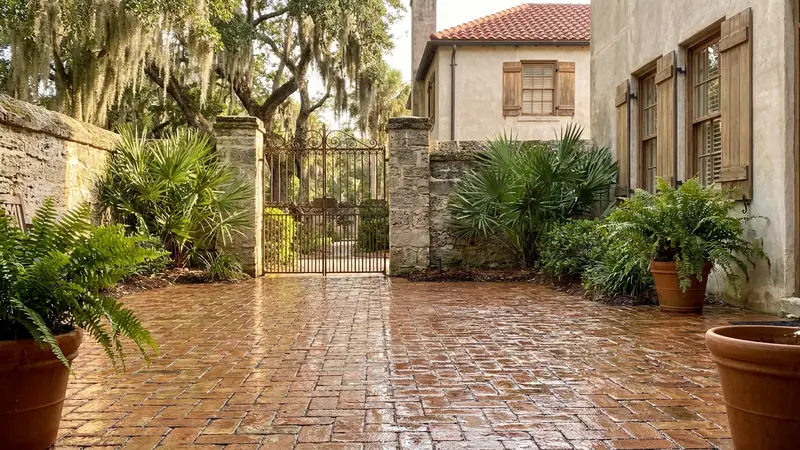
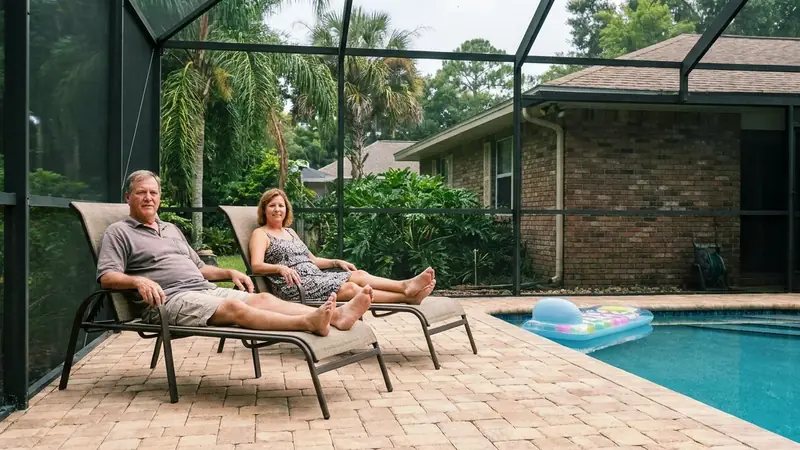
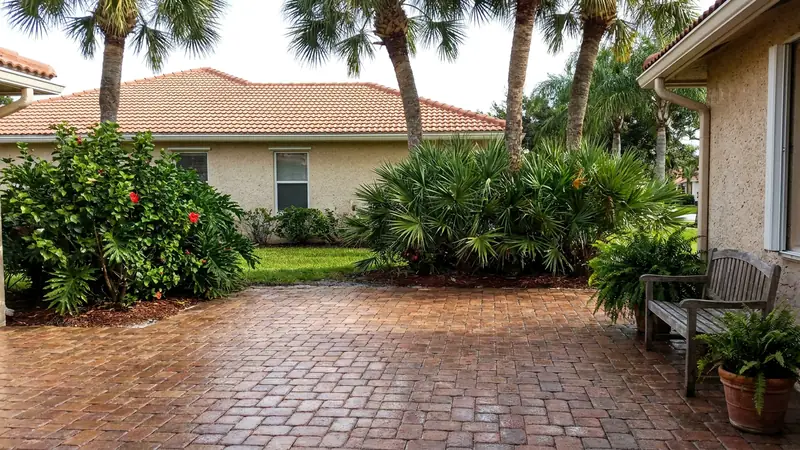
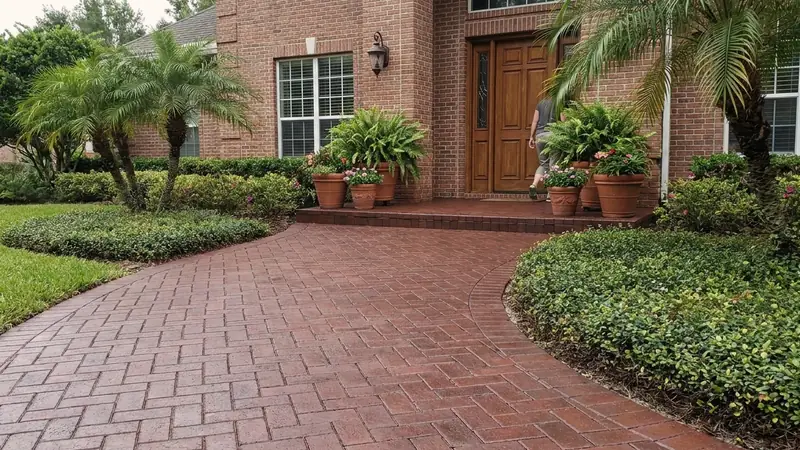
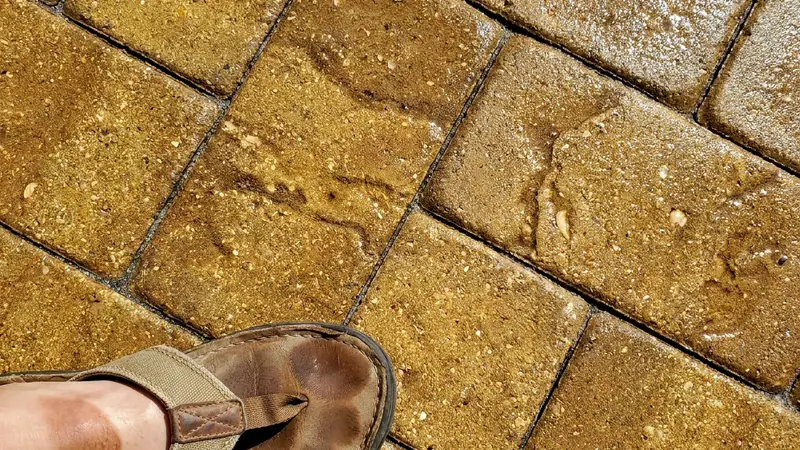
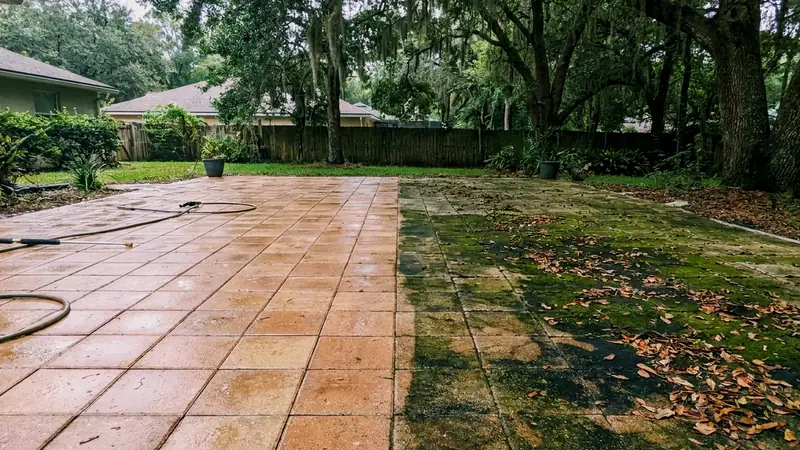
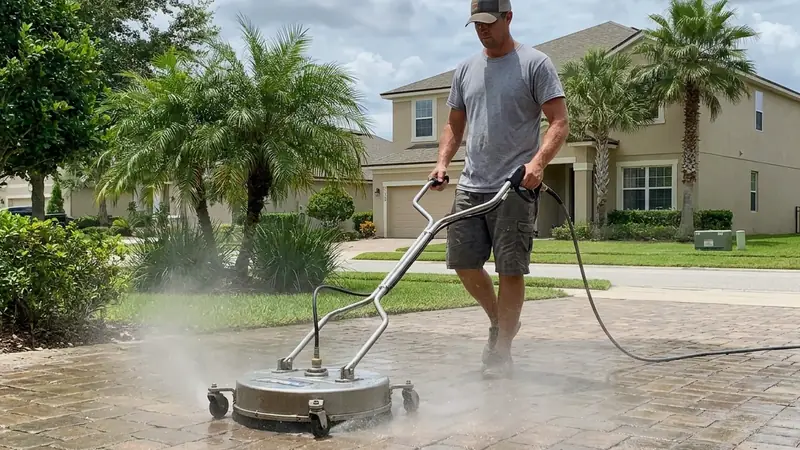
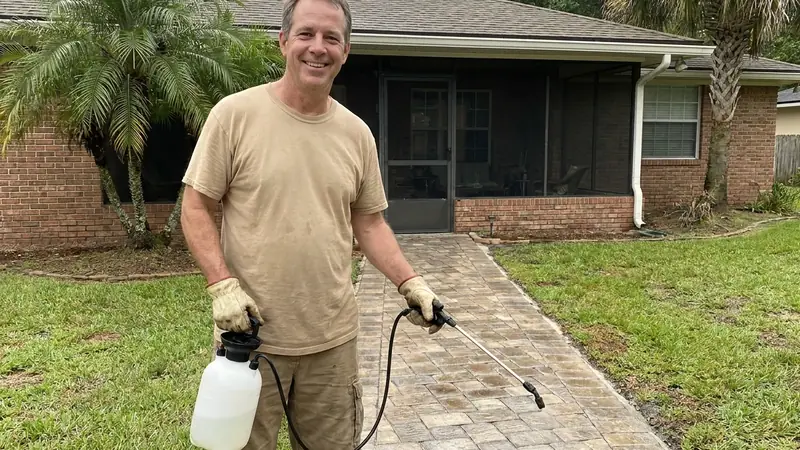
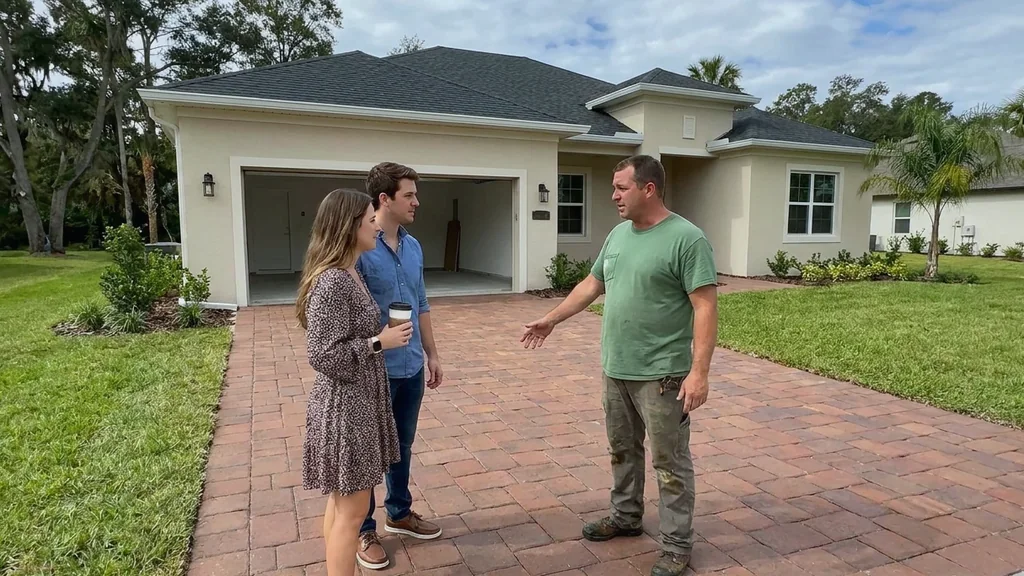
What do sealed pavers look like around Palm Valley?
Why local matters in Palm Valley
A contractor who knows Palm Valley asks whether your lot has flooded before. Canal Boulevard went under in October 2026, and Roscoe Boulevard took storm surge from Hurricane Irma in 2017. That history tells the contractor how long to let the pavers dry and which corners to test first. To reach someone who works here, call (904) 664-5908.
Local knowledge also covers the roads. Palm Valley lies east of the Intracoastal and west of A1A, with Butler Boulevard to the north and Palm Valley Boulevard to the south. Palm Valley Road carries traffic at almost any hour, which is worth knowing when equipment has to be hauled in and when a visit should be booked. You can ask for a free estimate and ask how the contractor plans the visit.
The humid months set the pace of work. Weather Spark, as cited by Wikipedia, says humid weather lasts here from April 26 to November 11, and August 5 is the muggiest day. A local contractor builds extra dry time into those months and does not seal damp pavers just to keep a date. If that sounds like what your patio needs, call (904) 664-5908.
How did Palm Valley get its name and its canal?
Settlers first called the area Diego Plains, and the many palm trees led them to choose the name Palm Valley. Don Diego Espinoza had settled the area by 1703. A canal dug in 1908 linked the San Pablo River to the Tolomato River, and a state marker says finishing the Intracoastal Waterway drained much of the old marshland. If you live near the old canal route, ask for a free estimate and mention the cross street.
The Palm Valley Community Center stands at 148 Canal Boulevard, and its building was moved from Camp Blanding in 1948. The Palm Valley Bridge on County Road 210 became a fixed four-lane span in 2002, and TPC Sawgrass opened in 1980 on 415 acres of swampland. Give your cross street when you call (904) 664-5908, and the contractor can place you near these landmarks.
Frequently Asked Questions
How much does it cost to seal pavers in Palm Valley?
Published prices across Northeast Florida land between $1.75 and $3.25 per square foot to clean, sand and seal. Shaded patios and pool areas need extra cleaning, which adds time. Stripping a failed old coat also costs more. A written quote with the square footage lets you compare bids fairly.
Is it good to seal brick pavers in Palm Valley?
Usually yes, since sealing helps hold joint sand and slows fading. Heavy rain flushes sand out of unsealed joints, a Jacksonville company says, and a Jacksonville company says sun noticeably fades unsealed concrete pavers within 3 to 5 years. Near the Intracoastal, a coat also gives salt and grime less to grab. Ask the contractor to look at your drive lanes, where wear shows first.
How often should pavers be resealed in Palm Valley?
Plan on a new coat every two to five years, going by what companies say. One Jacksonville company offers a water test: beading means the coat still works, and water that soaks in and darkens the paver means it is spent. Shaded and sprinkler-hit areas usually fail first, so test those spots.
Why is paver sealing so expensive in Palm Valley?
Labor is the bulk of it. A Jacksonville company says about two to three hours of prep go in ahead of each hour of sealing. Cleaning, re-sanding and drying come before any sealer goes on, so the work is more than the coat itself. That prep is what lets the coat last.
What does re-sanding and sealing pavers cost in Palm Valley?
That same $1.75 to $3.25 band includes the wash, the new joint sand and the sealer. Where you land depends on the surface size, how shaded it is and whether an old coat must be stripped. Ask for the square footage on the quote, so two bids can be compared on the same basis.
Can salt air damage pavers in Palm Valley?
It can leave marks. A paver maker says airborne salt can crystallize on surfaces as moisture dries, and that pale pavers show it sooner. Rinsing helps, and a sealed surface gives salt less to cling to. Ask the contractor how often to rinse the pavers between coats.
Can a Palm Valley pool surround be sealed?
Yes, with the right product and a longer drying plan. A St. Johns County company says shade, splash-out and constant moisture change prep and cure. A Jacksonville guide says most pool decks there get a penetrating sealer, so the deck stays less slippery.
Can Palm Valley pavers be sealed after a flood?
Yes, after the pavers are washed and completely dry. After standing water like the October 2026 flooding on Canal Boulevard, the contractor washes away what the water left and replaces lost joint sand first. Mention any past flooding at the first visit. That tells the contractor how long to plan for drying, and which low spots to check for lost sand.
Ready for a Free Estimate in Palm Valley?
Call (904) 664-5908 and tell us about your pavers.
Free, no obligation