
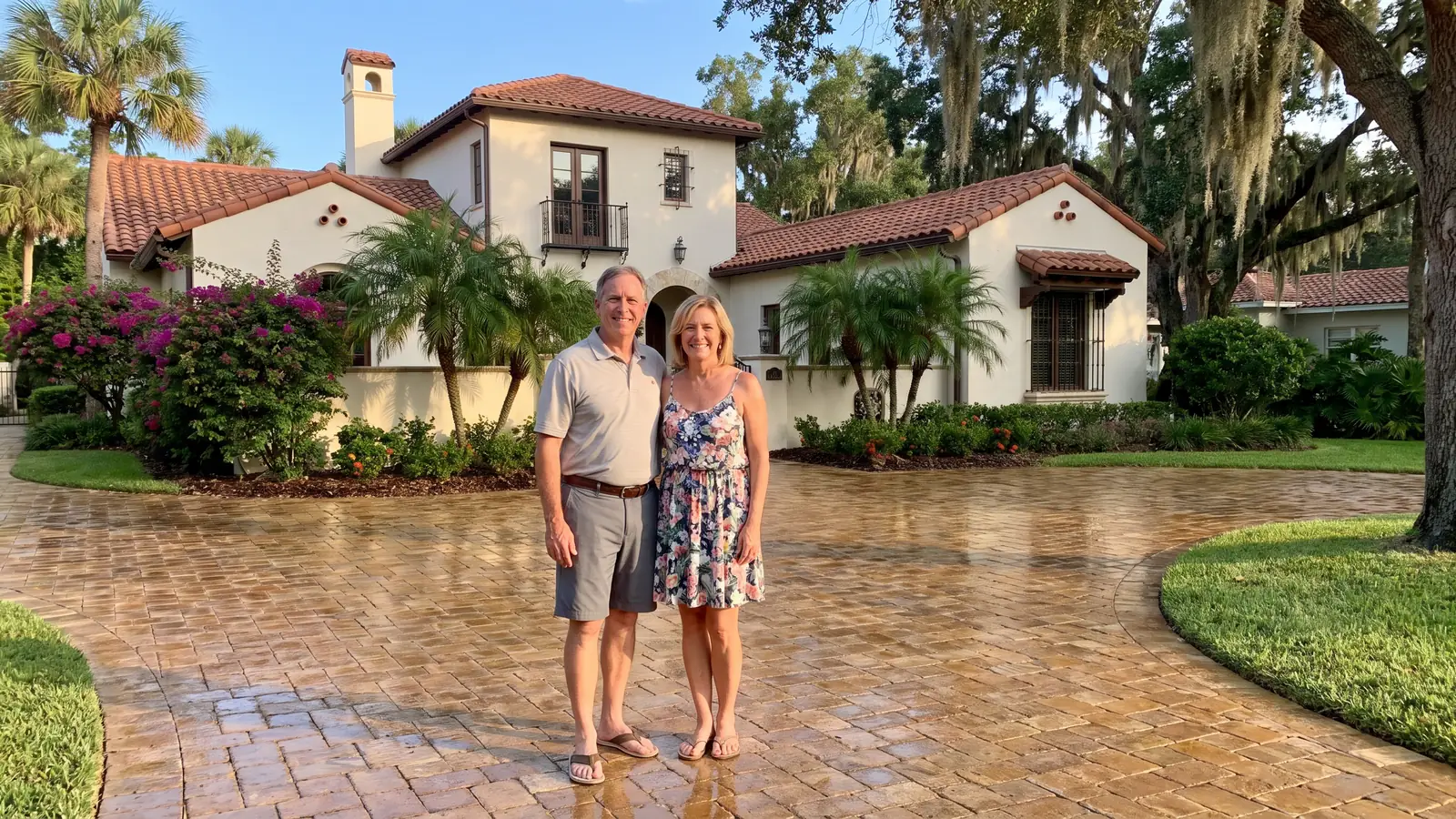
Paver sealing for Jacksonville Beach homes
Paver Sealing in Jacksonville Beach, FL
Salt spray and sandy joints are hard on Jacksonville Beach driveways, so call (904) 664-5908 to ask about sealing.
- Brings out deeper paver color
- Fresh joint sand helps lock pavers in place
- Gives weeds less room to grow
- Makes the surface easier to keep clean
- Free estimate, no obligation
Request a Free Estimate
Free, no obligation.
Fast, careful paver sealing in Jacksonville Beach
Paver sealing in Jacksonville Beach comes with a free estimate, whether your home is a few blocks from the pier or in San Pablo Terrace off Penman Road. A local contractor handles the wash, the new sand and the sealer on driveways, pool decks and patios. Once you ask for a free estimate, expect a reply inside 1 business day, usually much sooner.
Salt and sun leave pavers chalky and dull, and sand drifts out of the joints after every big rain. A good wash, fresh sand and a new coat bring back the color and tighten the lines. If you want to talk it through first, call (904) 664-5908 and tell the contractor what your pavers look like now.
Jacksonville Beach is a small city with a lot of water around it, so the contractor plans each job around salt, damp and weather. U.S. 90 ends at State Road A1A just three blocks from the ocean. If your pavers sit that close to the surf or farther in, you can ask for a free estimate and get a clear price.
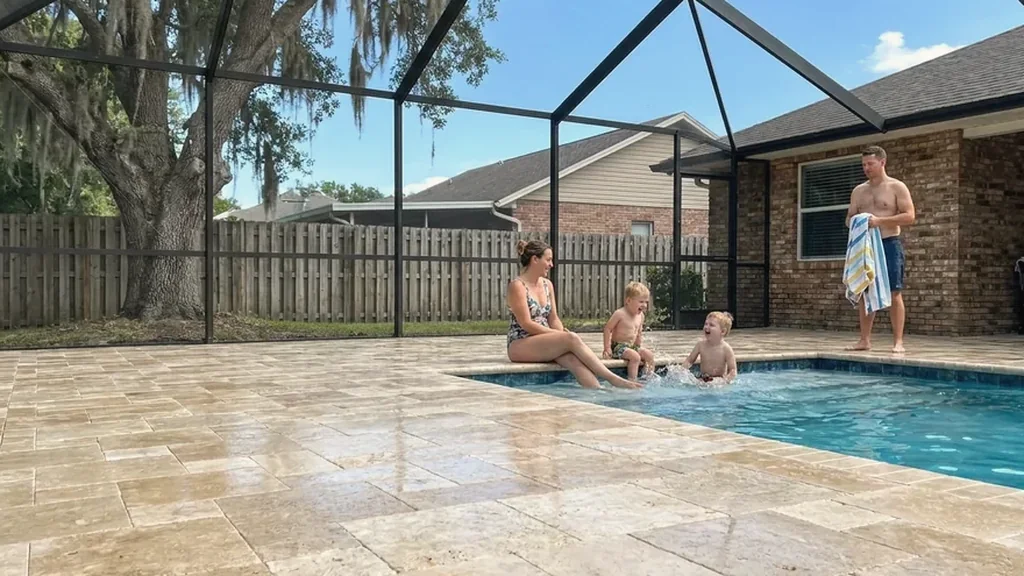
Why hire a local paver sealing contractor in Jacksonville Beach?
Beach homeowners choose a local paver contractor because salt, wind and heavy summer rain wear a driveway in ways inland yards never see. To hear how that plays out on your block, ask for a free estimate.
A free look at your pavers
The contractor checks your Jacksonville Beach driveway, deck or walkway at no charge. You get a number before you agree to a thing.
A range you can check
Around Northeast Florida a full clean, sand and seal is posted at $1.75 to $3.25 a square foot. Hold your quote up to it.
A finish to match the house
Matte suits a mid-century front and stays safer near a pool. A wet look deepens the color but shows scuffs sooner.
No strings after the visit
You choose the date, the finish and whether to go ahead. The estimate carries no obligation and you can compare other bids.
Get Your Free Estimate in Jacksonville Beach
Tell us about your pavers in Jacksonville Beach.
Free, no obligation
What paver problems show up most in Jacksonville Beach?
Salt that rides the wind
A paver maker writes that salt travels as tiny airborne particles and crystallizes on surfaces as moisture dries. About two thirds of Jacksonville Beach is water, and its listed elevation is 0 feet. That puts every driveway close to the spray. A beaches paver company says salt settles on unsealed pavers and leaves older ones chalky, so an open surface takes the hit. Rinsing and a fresh coat are what keep that salt from settling in. Pale pavers tend to show salt marks and splash residue sooner than darker ones.
Joint sand lost to summer rain
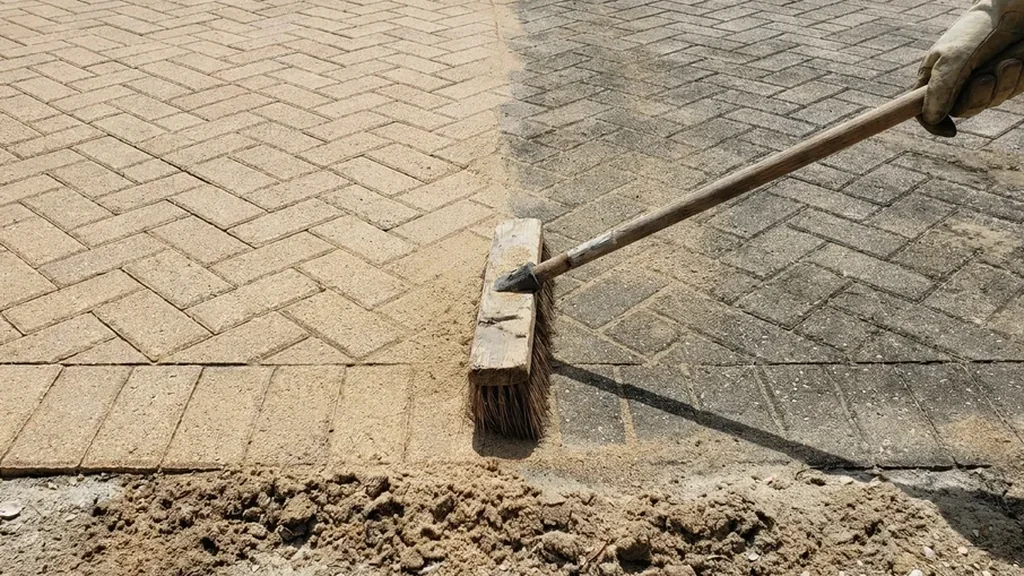
NOAA normals show about 52 inches of rain a year here, with August near 7.5 inches and September near 7.2. A beaches paver company says sandy ground and heavy summer rain make joint sand migrate. Thin joints let weeds in and let pavers shift a little. The sand has to be topped up before any sealer goes on. The wet season runs June through September and delivers more than half the year's rain across Northeast Florida.
Water that reaches the driveway
During Hurricane Matthew in 2016, water went over the dunes and inland to at least 2nd Street. In December 2016 a record 1.76 inches of rain fell in a day and driveways near 12th Avenue South flooded. Floodwater leaves silt and film on pavers. Sealer would lock that film in, which means the wash comes first. It is worth telling the contractor where your driveway sheds water.
Damp that never fully leaves
The same beaches company says humidity keeps surfaces from drying out fully and that shaded north-facing spots grow algae and mildew. A fence line or a shady side yard can hold green long after the sun-baked front has dried. Mildew that is sealed over only comes back sooner. Washing, then a real dry-out, is the order that works. The contractor checks those corners at the first visit.
Cloudy sealer from damp pavers
A Jacksonville paver company says nearly every call about sealer turning white traces to sealing damp pavers or laying a coat on too thick. It adds that drying time after cleaning matters most in humid months. At the beach, mornings often start damp. A careful contractor waits instead of rushing a coat onto wet ground. Sealing too thick can also leave a hazy look that only shows up after the first rain.
Do the older Pablo Beach blocks need different paver care?
Yes, because the oldest blocks and the newer ones were built in different eras with different yards. The town was called Ruby in 1884 and Pablo Beach from 1886, and it took the name Jacksonville Beach in 1925. South Pablo Beach has a walkable grid close to the ocean, and nearby Sea Grove has 174 homes built in the 1920s. Name your area when you ask for a free estimate.
Inland, San Pablo Terrace sits off Penman Road with homes built from 1955 to 2005, median year 1963. Streets there include Eastern Drive, 18th Avenue N and Arden Way. Ocean Terrace, near South Beach Park, goes back to the early 1980s and has an HOA. An HOA may have rules about outside work, so call (904) 664-5908 and mention yours.
The city also has a say at the curb. Its FAQ notes that many homeowners use city right-of-way beside their homes, that most of that use needs a revocable encroachment permit, and that paver driveway standards were updated in October 2023. If your pavers reach the street edge, ask the city what applies. Then ask for a free estimate so the contractor knows where your surface ends.
Not every block is on the sand. San Pablo Terrace sits inland off Penman Road, with a median living area of about 1,646 square feet and about 98 percent single-family homes. Pengate Forest nearby has 15 homes built from 1994 to 2023. Whichever you have, ask for a free estimate and describe the layout.
What does paver sealing cost in Jacksonville Beach?
Expect a number between $1.75 and $3.25 per square foot for the wash, sand and seal, going by what Northeast Florida companies publish. A Jacksonville Beach quote moves inside that band with old sealer, lost joint sand and damp shade. A pool deck beside a driveway and a front walk adds up quickly. To price your own surfaces, ask for a free estimate.
Access matters too. One Jacksonville guide lists locked gates, stairs and narrow side yards as things that add prep time. Beach lots are often narrow, so ask about that when you call (904) 664-5908. Smaller jobs also tend to cost more per foot, so measure every paver area at one visit.
Timing can help. One Jacksonville guide recommends fall sealing once hurricane season ends and spring sealing before the humid months arrive. November is the driest month at about 2.5 inches in the NOAA normals. Call (904) 664-5908 to ask which window suits you.
| Paved area | Typical example | Clean, sand and seal |
|---|---|---|
| 300 sq ft | Small patio or walkway | $525 to $975 |
| 600 sq ft | Two car driveway | $1,050 to $1,950 |
| 1,000 sq ft | Large driveway or pool deck | $1,750 to $3,250 |
| 1,500 sq ft | Driveway plus pool deck | $2,625 to $4,875 |
Math based on the $1.75 to $3.25 per square foot that Northeast Florida paver companies published as of November 2026. Your contractor sets the actual price after seeing the surface. Repairs, leveling and stripping failed sealer are usually extra.
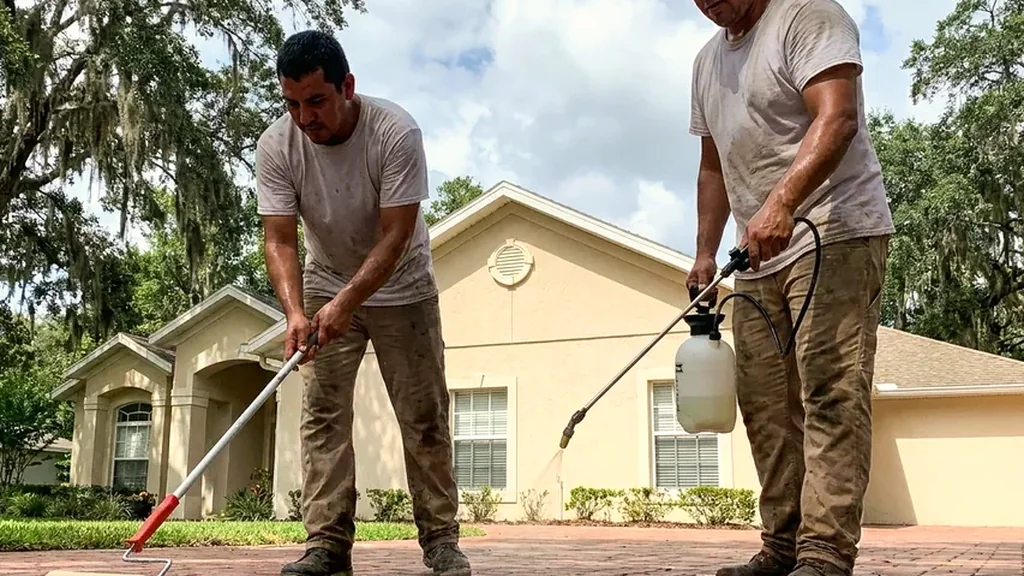
How does a paver sealing job work in Jacksonville Beach?
Walk the lot and read the old coat
The contractor looks at where water drains, where salt spray lands and whether the pavers were sealed before. Sunken or lifted sections are reset first, since a coat preserves whatever it covers. If the old product is a mystery, that gets settled now, since a water-based coat cannot go over a solvent-based one. Mention any past flooding on your lot. It also helps to say how the surface is used, whether for cars, a pool or a quiet walk. You also get to point out which spots bother you most.
Wash off the salt and film
Cleaning removes salt residue, mildew, algae and silt left by past storms. Pavers nearest the ocean may need extra care so nothing chalky stays behind. Rinse water is kept away from doors, landscaping and the pool. Nothing gets sealed until the surface is clean. A second rinse checks that no cloudy patches remain.
Replace the joint sand
Washing pulls sand out of the joints, so it goes back in before sealing. A beaches company says joints are re-sanded before sealing, never after. Joints get filled and the surface gets swept. After a wet month, expect this step to take longer. A dry broom pass finishes the job.
Let the surface dry out
Sealer needs a dry surface, and beach air is humid. A shaded side yard can stay damp long after a sunny drive has dried. The contractor waits for a clear window, since damp pavers can turn a coat cloudy. Hurricane season runs June 1 to November 30, so the forecast matters.
Apply the finish you picked
Sealer goes on in the finish you chose. A wet look shows scuffs sooner than matte, and matte is the safer pick near pools. Quotes commonly run two to five years between coats, while pool decks with chlorine or salt systems can need one sooner. Ask how long to stay off, since the answer depends on the product. Expect the contractor to name the product so you can write it down.
Complete paver services in Jacksonville Beach
Jacksonville Beach jobs begin with salt removal. The wash lifts salt and film, new sand goes into every joint, and sealer goes down after the pavers are dry. Sealing last means nothing dirty gets trapped. To ask how long each stage takes on your lot, call (904) 664-5908.
Driveways bake in the sun and take tire marks. Pool decks get splashed, so traction matters there. Courtyards and side walks stay shaded and tend to go green first. When you ask for a free estimate, list each surface so the contractor can plan them one at a time.
Water-based and solvent-based sealers both exist, in matte or wet look, and the old coat decides which one can go on. The city is known for mid-century homes, much of it by architect William Morgan, and a quiet matte often suits them. Call (904) 664-5908 to talk through which finish fits your home.
Timing at the beach depends on weather. Summer brings the most rain, and hurricane season runs through November. November is the driest month in the NOAA normals, at about 2.5 inches. For a date that leaves room for the weather, ask for a free estimate.
Questions to ask before you hire
- Can I see photos of pavers you have sealed near my neighborhood?
- Will the written estimate list the square footage, the sealer and the price?
- How long until I can park a car on the driveway again?
- Can you test a small spot first so I can see the color before the whole job?
- Do you cover my plants and landscaping before you start?
- Do you suggest a matte, satin or wet look finish for my driveway, and why?
- What pressure do you wash at so the surface does not chip or etch?
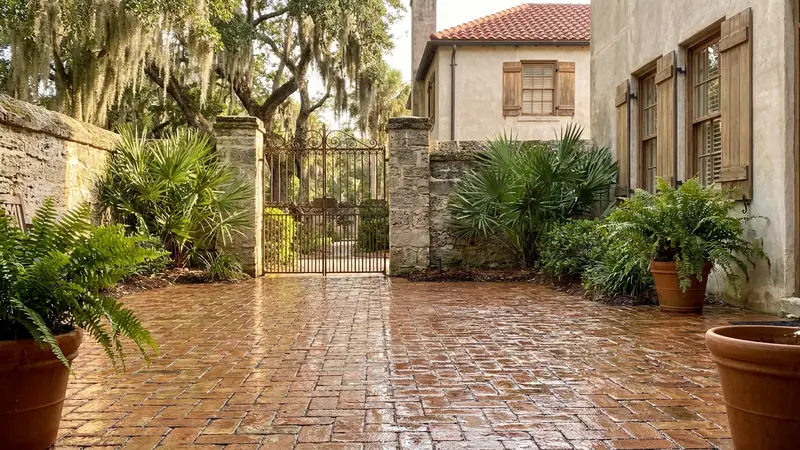
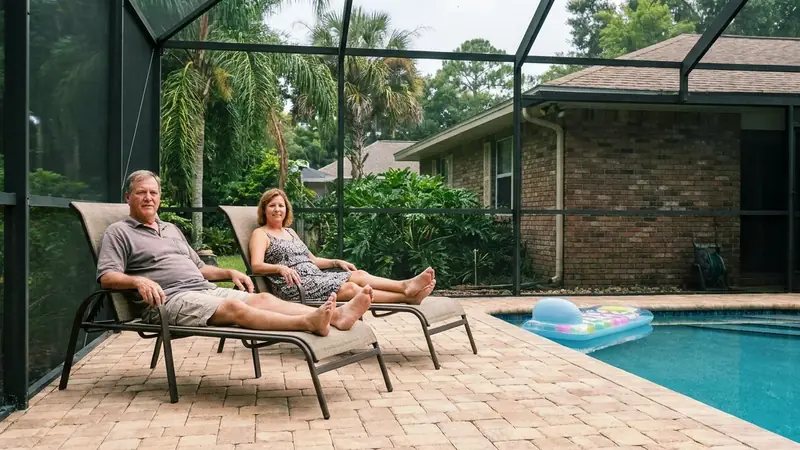
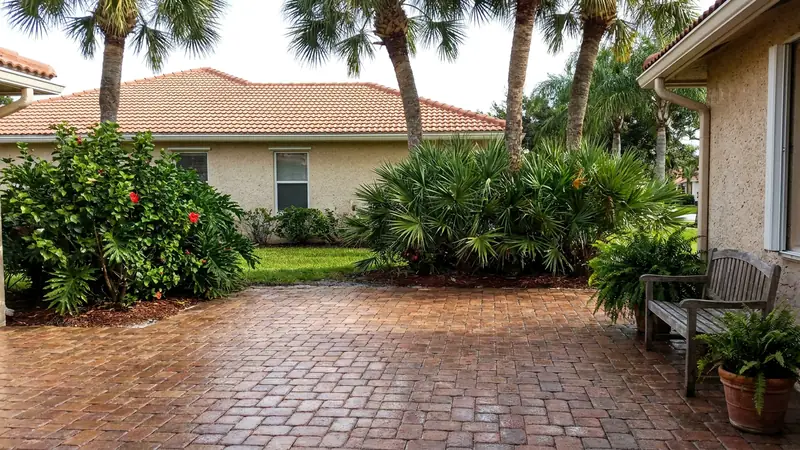
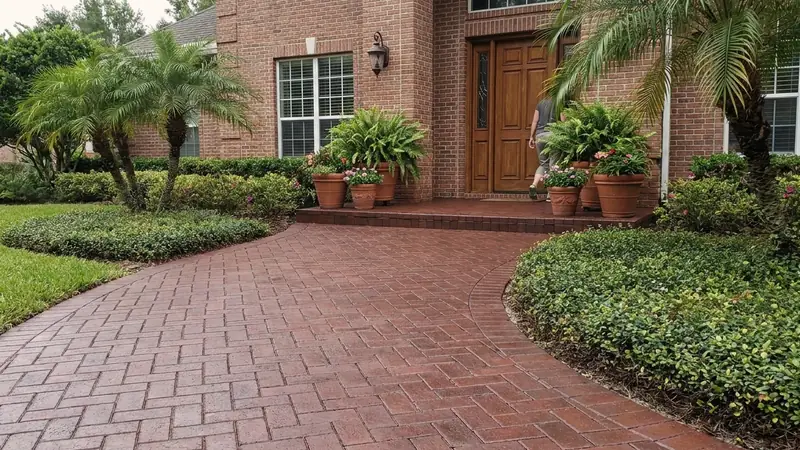
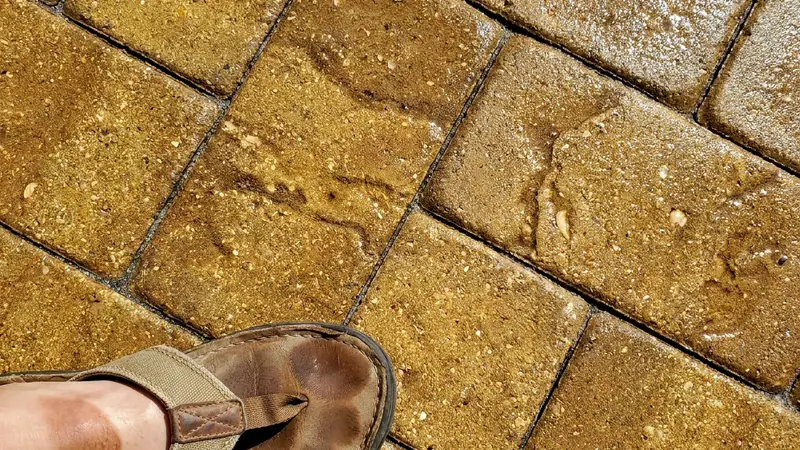
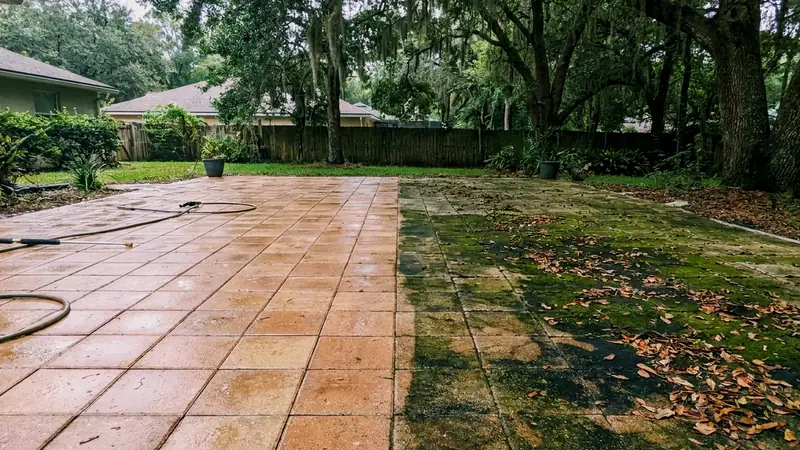
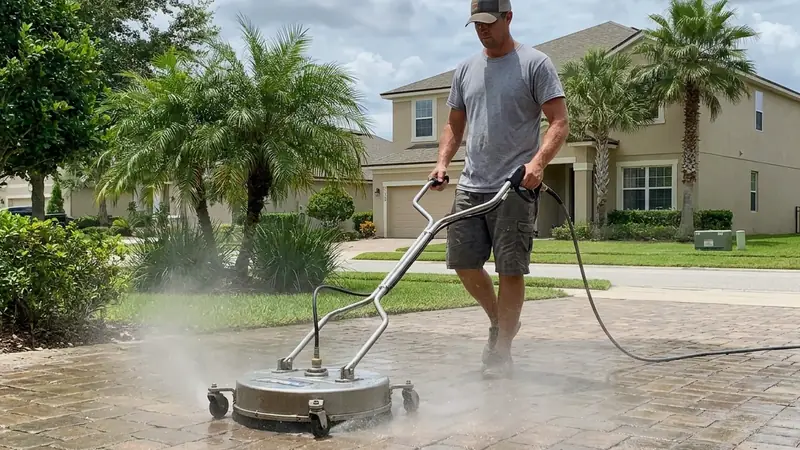
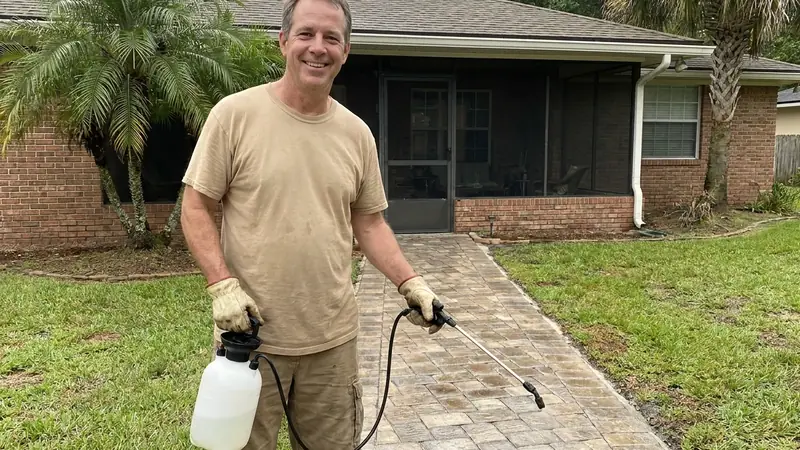
What do sealed pavers look like around Jacksonville Beach?
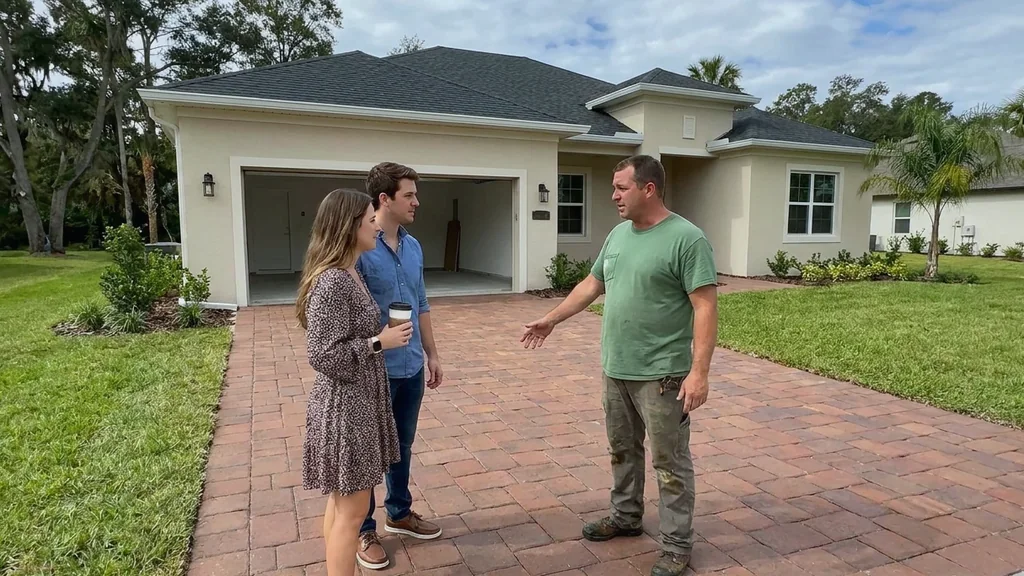
Why local matters in Jacksonville Beach
A contractor who works the beaches knows how fast salt and humidity change a paver surface. That means fewer surprises after the first wash. They will also ask about the ocean side of your lot and any flooding you have seen. To reach someone who works Duval County's coast, call (904) 664-5908.
Local work also means knowing the water. Matthew pushed water over the dunes in 2016, and one rainy December day put driveways near 12th Avenue South under water. A contractor who has heard those stories asks about low spots before quoting. You can ask for a free estimate and ask how your lot's drainage would change the plan.
Rules and permits come into it as well. The city's right-of-way FAQ and its paver driveway standards, updated in October 2023, may touch pavers near the street. A local contractor knows to ask where your property line ends. If that sounds like your driveway, ask for a free estimate and mention it, with no obligation to hire anyone.
Why is it called Jacksonville Beach and not Pablo Beach?
The name changed twice and then stuck, since the settlement began as Ruby in 1884 and became Pablo Beach in 1886. It was incorporated as Pablo Beach in 1907 and took the name Jacksonville Beach in 1925. The Beaches Museum at 381 Beach Boulevard keeps that story, with the area's first post office, a 1911 train engine and a chapel from 1886. If you live near those blocks, ask for a free estimate and ask about your pavers.
The pier tells a storm story. Hurricane Floyd destroyed it in 1999, it was rebuilt five years later, and Matthew damaged it again in 2016. The city reopened it on July 6, 2022, after a three-year rebuild. Wherever you are in Jacksonville Beach, call (904) 664-5908 and name your street.
Other landmarks line the same blocks. The Casa Marina Hotel from 1925 is a Mission-style building listed on the National Register in 1993, and the 1947 lifeguard station is an Art Moderne design listed in 2014. Latham Plaza and its amphitheater sit at 11 1st Street N. After a look at those streets, ask for a free estimate for a free paver estimate.
The numbers explain the salt. The city covers about 7.3 square miles of land and 14.6 square miles of water, and it counted 23,830 people in 2020. In 1930 it had 409. Streets old and new share the same sea air, so ask for a free estimate and ask about your block.
Frequently Asked Questions
Is it good to seal pavers near the ocean in Jacksonville Beach?
Yes, in most cases, because sealer slows what salt, sun and humidity do to the surface. A paver maker notes that salt crystallizes on surfaces as moisture dries. A contractor can check your pavers and tell you whether a coat makes sense now. Fading is another reason, since unsealed concrete pavers lose color within 3 to 5 years according to a Jacksonville company.
How long do paver sealers last in Jacksonville Beach?
Most quotes put it at two to five years between coats. A Jacksonville company says pool decks with chlorine or salt systems and sunny driveways need resealing about every 18 to 24 months. Shaded patios with light traffic run about 24 to 36 months.
How much is sealant for pavers in Jacksonville Beach?
Published rates in Northeast Florida land between $1.75 and $3.25 per square foot for the whole clean, sand and seal. That price covers the wash and new joint sand as well as the coat. Ask for the total square feet in the quote so you can compare.
Is it better to spray or roll paver sealer in Jacksonville Beach?
Pros typically do both, spraying and then back-rolling. One Jacksonville company says spraying gives even coverage and back-rolling works the sealer into the joints. Rolling by itself can leave lap marks, while spraying by itself risks too much product on textured pavers.
What finish is best on a Jacksonville Beach pool deck?
Matte is the safest finish near pools. One Jacksonville company says gloss is slippery when wet and that pool decks need an anti-slip additive with any finish. Ask the contractor which product and additive will go on your deck.
Why does sealer turn white on Jacksonville Beach pavers?
It usually means the pavers were damp or the coat went on too thick. A Jacksonville paver company says that covers nearly every call it gets about white sealer. Humid beach air makes patience important, so the surface should be fully dry first.
Do I need city permission to redo pavers near the street in Jacksonville Beach?
It depends on where your pavers sit. The city says most use of its right-of-way beside a home needs a revocable encroachment permit, and its paver driveway standards were updated in October 2023. Ask the city about your address before work starts.
Can sealing fix sunken pavers in Jacksonville Beach?
No, sunken or lifted sections need resetting first. A Jacksonville company says a coat locks in whatever is there, dips included. Point out low spots at the first visit so they can be priced in. Those repairs come before the sealing starts.
How soon can I park on sealed pavers in Jacksonville Beach?
People can usually walk on it after a few hours, while cars stay off for roughly a day. Product and weather set the exact time. Damp beach mornings can add to it, so ask the contractor for a time. Plan on moving cars for that day.
Do mid-century homes in Jacksonville Beach need a certain paver finish?
There is no fixed rule, but many owners choose matte so the pavers stay quiet beside the house. Jacksonville Beach has a notable collection of mid-century modern homes, much of it by architect William Morgan. Wet look is a fine choice too if you like deeper color.
Ready for a Free Estimate in Jacksonville Beach?
Call (904) 664-5908 and tell us about your pavers.
Free, no obligation